Introduction
Radha Rani holds a special place in the hearts of millions of devotees across India and around the world. Her name is closely associated with Lord Krishna, the sacred land of Vrindavan, and the path of devotion known as bhakti.
In many Hindu homes, people begin their day by saying “Radhe Radhe.” In temples, devotees sing bhajans dedicated to Radha and Krishna. In places such as Vrindavan and Barsana, her presence is an important part of everyday religious life.
But who is Radha Rani? Why is she worshipped alongside Lord Krishna? And what makes her so important in Hindu tradition?
Let us understand her story, religious significance, and the meaning of her devotion in simple language.
Who Is Radha Rani?
Radha Rani, also known as Shri Radha, Radhika, and Srimati Radharani, is a highly revered figure in Hindu devotional traditions, especially those centred on Lord Krishna.
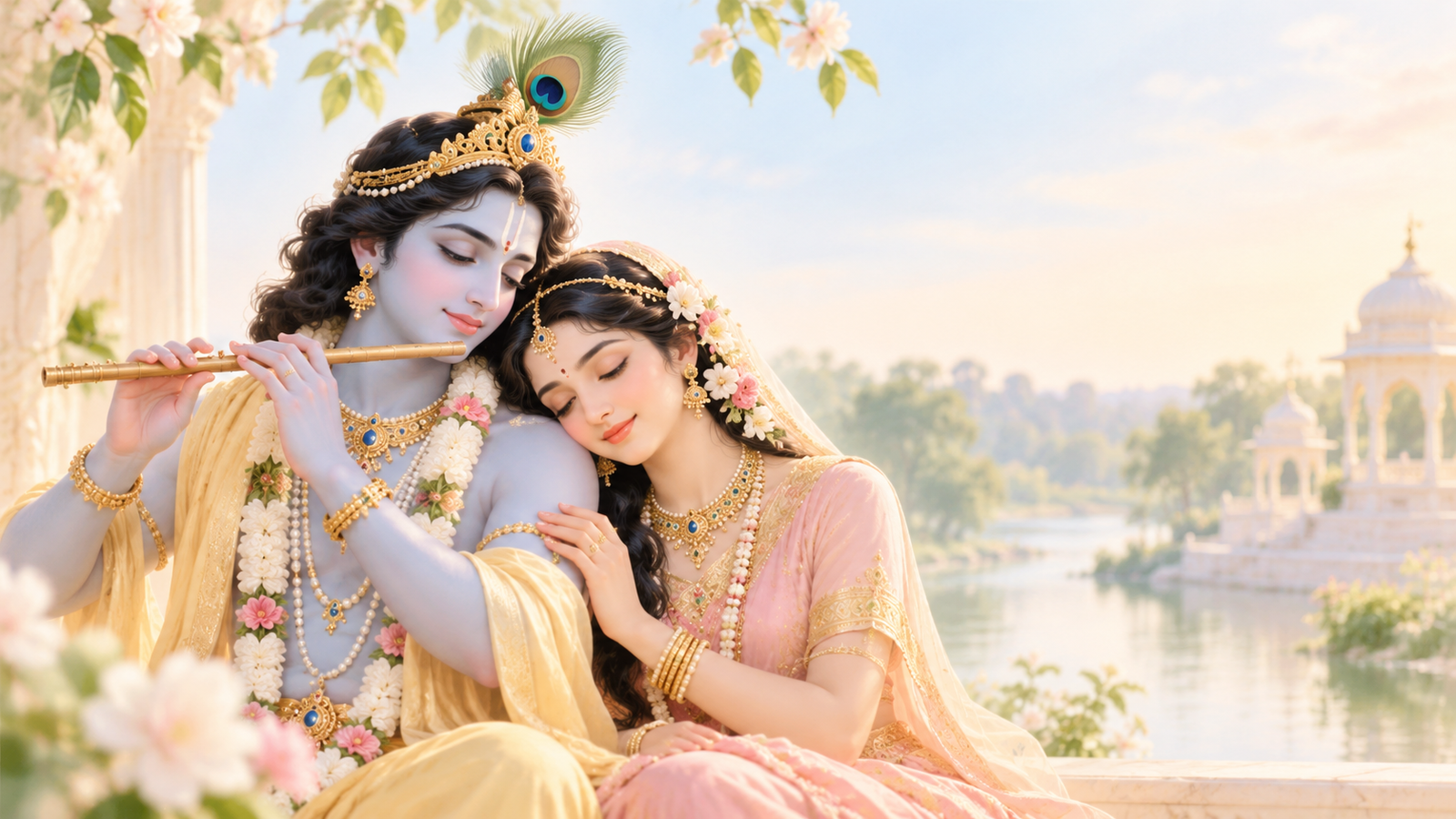
She is known as Krishna’s beloved and eternal consort. In many Vaishnava traditions, Radha is worshipped as the embodiment of pure love and devotion towards God.
Her relationship with Krishna is not understood merely as an ordinary love story. For devotees, it represents a deep spiritual connection between the individual soul and the Divine.
Different Hindu traditions explain Radha’s divine identity in different ways. Some regard her as Krishna’s eternal spiritual energy, while others place special emphasis on her unique position as the highest example of loving devotion.
Although the details may vary between traditions, Radha and Krishna are inseparable in the devotional lives of millions of people.
The Story of Radha Rani and Lord Krishna
According to popular devotional traditions, Radha and Krishna are closely connected with the region of Braj, which includes places such as Vrindavan, Barsana, and Govardhan.
Krishna is remembered for his childhood pastimes in this region, where he lived among cowherds and their families. Radha is celebrated in devotional literature as his most beloved companion.
Their stories describe moments of joy, love, separation, longing, and reunion. These are not simply stories about two people. Devotees also understand them as expressions of the soul’s longing to experience closeness with God.
One important work that celebrates their relationship is the Gita Govinda, a Sanskrit poem composed by the poet Jayadeva around the 12th century. It describes the love, separation, and reunion of Radha and Krishna through beautiful poetry and devotional imagery.
Over time, poets, saints, musicians, and spiritual teachers helped spread Radha Krishna devotion across different parts of India.
It is important to remember that popular stories about Radha’s life come from different devotional texts and regional traditions. Not every detail appears in every Hindu scripture.
Why Is Radha Rani Worshipped?
Radha Rani is worshipped for several reasons, depending on the tradition and the devotee’s understanding of her divine role.
1. She represents pure devotion
Radha is often described as the highest example of bhakti, or loving devotion to God.
Her love for Krishna is understood as sincere and selfless. It teaches devotees to approach the Divine with love rather than treating worship as a way to gain material rewards.
2. She represents divine love
In Radha Krishna traditions, divine love is more than an emotion. It is a way of understanding the relationship between the soul and God.
The longing expressed in Radha’s stories is often interpreted as the desire to experience the presence of the Divine.
3. She has a unique place in Krishna devotion
Many devotees believe that approaching Krishna through Radha’s grace is an important part of their spiritual path.
This understanding is particularly significant in several Vaishnava traditions, although beliefs and practices differ among communities.
4. She inspires faith and surrender
Radha’s devotion encourages people to develop humility, patience, sincerity, and faith.
For many devotees, remembering her name is a simple way to turn their thoughts towards God during daily activities.
What Do Hindu Scriptures Say About Radha Rani?
Radha’s place in Hindu literature developed across different texts and periods. Understanding these sources helps explain why her importance is expressed in several ways.
The Bhagavata Purana
The Bhagavata Purana, particularly its Tenth Book, describes Krishna’s life in Braj and his relationship with the gopis. These stories are central to Krishna devotion.
However, Radha is not explicitly named in the commonly used Sanskrit text of the Bhagavata Purana. Many Vaishnava teachers interpret particular passages as referring to her, while other readers understand those passages differently.
This is an important example of how scriptural interpretation can vary between traditions.
The Gita Govinda
The Gita Govinda, written by Jayadeva, is one of the best-known works devoted to the relationship between Radha and Krishna.
The poem explores their love, separation, longing, and reunion. Its language combines romantic poetry with spiritual meaning.
The work became highly influential in devotional music, dance, painting, temple traditions, and the worship of Radha Krishna.
Later Vaishnava literature
Other devotional works, including texts associated with different Vaishnava traditions, give Radha a central theological role.
These writings explore her divine nature, her relationship with Krishna, and the meaning of her devotion.
Together, these literary and religious traditions have helped establish Radha Rani as one of the most beloved figures in Hindu devotional life.
Why Is Radha Rani Associated With Vrindavan and Barsana?
Vrindavan and Barsana are two important places associated with Radha Krishna devotion.
Vrindavan is widely revered as the setting of Krishna’s childhood and youthful pastimes. The town has numerous temples dedicated to Radha and Krishna, and devotees visit throughout the year for worship and pilgrimage.
Barsana is traditionally regarded as Radha Rani’s birthplace or home in popular Braj devotional traditions. The Shri Radha Rani Temple, situated on a hill, is an important pilgrimage destination.
Both places are closely connected with Braj culture, devotional songs, festivals, and religious storytelling.
For pilgrims, visiting these sacred places is not simply sightseeing. It is an opportunity to participate in traditions that have been passed down through generations.
What Does “Radhe Radhe” Mean?
“Radhe Radhe” is a devotional greeting and expression of reverence for Radha Rani.
People commonly use it in Vrindavan, Barsana, and other places where Radha Krishna devotion is an important part of local culture.
For devotees, saying “Radhe Radhe” is a way to remember Radha Rani and express their devotion. It may be spoken when greeting someone, entering a temple, meeting another pilgrim, or beginning a devotional activity.
The phrase also reflects the close relationship between Radha and Krishna in many devotional traditions.
Its meaning is not limited to the words themselves. For those who use it with devotion, it can be a small reminder to bring faith and kindness into everyday life.
What Can We Learn From Radha Rani?
Radha Rani’s stories have inspired generations of devotees. People interpret their lessons in different ways, but several themes appear repeatedly in devotional teachings.
Love without selfishness: Radha’s devotion is often presented as love that does not depend on personal gain.
Faith during difficult times: Stories of separation and longing remind devotees that spiritual life may involve patience and perseverance.
Humility: Bhakti encourages people to approach God with sincerity rather than pride.
Remembering the Divine: Devotional traditions encourage people to keep their thoughts connected with God through prayer, remembrance, songs, and worship.
These ideas can be meaningful to people who want to develop a more thoughtful and devoted approach to life.
Frequently Asked Questions About Radha Rani
1. Who is Radha Rani in Hinduism?
Radha Rani is a highly revered figure in Hinduism, especially in Vaishnava traditions. She is worshipped as Krishna’s beloved and is widely regarded as an ideal of divine love and devotion.
2. Is Radha Rani a goddess?
Yes. Many Hindu devotional traditions worship Radha as a goddess and as Krishna’s eternal consort or divine spiritual energy. The exact theological explanation differs between traditions.
3. Is Radha Rani mentioned in the Bhagavad Gita?
Radha Rani is not explicitly named in the Bhagavad Gita. Her role is explored in other devotional literature, including the Gita Govinda and texts associated with Vaishnava traditions.
4. Why is Radha Rani worshipped with Krishna?
Many devotees believe that Radha and Krishna express the inseparable relationship between divine love and the Divine. Worshipping them together reflects the central role of love and devotion in these traditions.
5. Where is Radha Rani believed to have been born?
In popular Braj devotional tradition, Barsana is regarded as Radha Rani’s birthplace. It is an important pilgrimage destination for her devotees.
6. Why do people chant “Radhe Radhe”?
Devotees say “Radhe Radhe” to remember Radha Rani, express reverence, and show their devotion. It is also a common greeting in parts of the Braj region.
Radha Rani has a special place in Hindu devotional life because her stories express the deep connection between love, faith, and devotion to God.
Through poetry, religious literature, temple worship, and centuries of devotional traditions, her relationship with Lord Krishna has inspired millions of people.
For devotees, remembering Radha Rani is a way to reflect on selfless love, humility, and the desire for a closer relationship with the Divine.
Whether someone encounters her through the Gita Govinda, visits the temples of Vrindavan and Barsana, or simply hears the words “Radhe Radhe,” her place in Hindu devotion remains deeply meaningful.
Radhe Radhe.